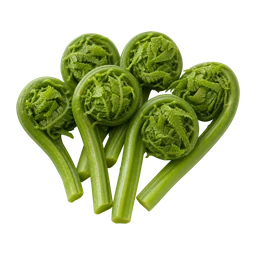
No.099Leafy GreensIn season Spring
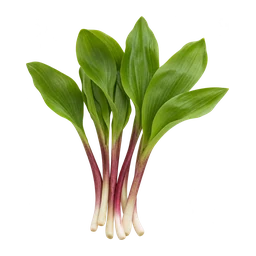
Gyoja Ninniku (Alpine Leek) Cooking Times
Gyoja Ninniku (Alpine Leek): boil for about 10 sec + 1 min (in boiling water). Times vary with portion size, cut and heat, so check the conditions for each method below.
Cooking Times by Method
Bars compare the times
- Boil
About 10 sec + 1 min
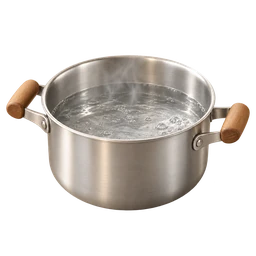
In boiling waterOne step of a soy-pickle recipe: in water with 1% salt, dip the bottom third (stem end) for about 10 sec, then submerge the whole leaves for about 1 min until wilted. Plunge into cold water and squeeze dry (the amount is given as "100" with no unit)
Start a timer - Stir-fry
About 1 min
One step of a stir-fry recipe: 50 g cut 4 cm long, added once the pork and cabbage are cooked over medium heat and stir-fried for about 1 min; then the seasoning is tossed in briefly
Start a timer
Preparation
Trim a little off the base and remove the red papery sheath
Storage & Use PlanTips & dates
Storage Time Guide
- FridgeRawAbout 2–3 days
Wrap the base in a damp paper towel, put in a plastic bag and store upright in the fridge's vegetable drawer (2 to 3 days).
Source (Japanese)
Estimates assume fresh produce stored as described. Freshness and temperature affect storage; these dates do not guarantee safety. Follow pack dates and instructions. Do not eat food showing spoilage, regardless of the date.
Gyoja Ninniku (Alpine Leek) Cooking FAQs
How long to boil Gyoja Ninniku (Alpine Leek)?
Boil Gyoja Ninniku (Alpine Leek) for About 10 sec + 1 min (In boiling water). One step of a soy-pickle recipe: in water with 1% salt, dip the bottom third (stem end) for about 10 sec, then submerge the whole leaves for about 1 min until wilted. Plunge into cold water and squeeze dry (the amount is given as "100" with no unit)
How long to stir-fry Gyoja Ninniku (Alpine Leek)?
Stir-fry Gyoja Ninniku (Alpine Leek) for About 1 min. One step of a stir-fry recipe: 50 g cut 4 cm long, added once the pork and cabbage are cooked over medium heat and stir-fried for about 1 min; then the seasoning is tossed in briefly
When is gyoja ninniku in season?
In Japan, cultivated gyoja ninniku is available from about January to March and wild plants from about April to May. It is known mainly as a wild vegetable of Hokkaido and is also called Ainu negi.
Which poisonous plants are mistaken for gyoja ninniku?
According to Japan's Ministry of Health, Labour and Welfare, spring poisonings occur when people mistake autumn crocus (its leaves resemble gyoja ninniku and hosta) or false hellebore (Veratrum; its shoots resemble gyoja ninniku and hosta shoots) for the edible plant. Autumn crocus poisoning has caused deaths, and the Veratrum toxins are not destroyed by cooking. Veratrum is hard to tell apart when the shoots first emerge, so the ministry advises checking plants whose leaves have opened a little.
Cooking Time Sources
Listed methods have documented times and conditions. Use the portion size and preparation shown in each tip. Sources are in Japanese.
- デリッシュキッチン:ごはんがすすむ! 行者にんにくの醤油漬け(boil) (checked 2026-11-20)
- デリッシュキッチン:ごはんがすすむ♪ 行者にんにくと豚肉のオイスター炒め(stir-fry) (checked 2026-11-20)
FAQ sources
- Source: Delish Kitchen: 11 kinds of Japanese mountain vegetables (sansai), with recipes (Japanese) (in Japanese; summarised by HeatBook; checked 2026-11-20)
- Source: Ministry of Health, Labour and Welfare (Japan): Natural toxin risk profile, autumn crocus (Colchicum autumnale) — summarised and adapted by HeatBook (Japanese) / 公共データ利用規約(第1.0版) (in Japanese; summarised by HeatBook; checked 2026-11-20)
- Source: Ministry of Health, Labour and Welfare (Japan): Natural toxin risk profile, Veratrum (baikeiso), summary — summarised and adapted by HeatBook (Japanese) / 公共データ利用規約(第1.0版) (in Japanese; summarised by HeatBook; checked 2026-11-20)